After-Hours Emergency Plumber Marketing & Service Promotion Strategies
- Emergency plumbing calls generate ticket values 30-45% higher than standard service appointments, making after-hours availability one of the most profitable decisions you can make as a plumber.
- Google Local Service Ads with the Google Guaranteed badge is the single fastest channel to capture emergency plumbing calls, often generating qualified leads within 48-72 hours of activation.
- Emergency-modified keywords like “emergency plumber near me” convert at 4-5x higher rates than standard plumbing terms, but only if your website, ads, and Google Business Profile are optimized to answer that call immediately.
- Seasonal spikes are predictable and profitable — emergency plumbing searches jump 609% during January freeze events, meaning your marketing budget needs to scale before the cold hits, not after.
- Keep reading to discover the exact strategies — including a real case study of a plumbing company that tripled after-hours calls in just 90 days — that turn midnight emergencies into your most reliable revenue stream.
When a pipe bursts at 2 AM, the homeowner isn’t shopping around — they’re calling the first plumber they trust.
That single reality is what makes after-hours emergency plumber marketing one of the highest-return investments in the entire home services industry. The average emergency plumbing job brings in between $650 and $950, compared to $450 to $600 for a standard scheduled appointment. If you’re not showing up at the top of search results when panic sets in, that revenue is going directly to your competitor. FunnelTide specializes in emergency service marketing for plumbers, helping contractors capture these high-intent calls before anyone else picks up the phone.
This guide covers every channel, tactic, and optimization that puts your name first when homeowners need you most.
Emergency Plumbing Calls Are the Most Profitable Calls You Will Ever Get
Most plumbing businesses treat emergency service as a reactive offering — something they handle when it comes up. The ones growing fastest treat it as a dedicated revenue channel with its own marketing strategy, budget, and conversion funnel.
Why Emergency Jobs Pay 30-45% More Than Standard Service Calls
Emergency jobs command premium pricing for a simple reason: the homeowner has no leverage. A burst pipe, a sewage backup, or a failed water heater during a cold snap demands immediate resolution. According to ServiceTitan, emergency plumbing calls carry ticket values 30-45% higher than scheduled service appointments. The Insurance Information Institute reports that water damage and freezing account for a significant share of homeowner insurance claims each year, reinforcing just how serious these events are for the people experiencing them.
Beyond the ticket value, emergency customers convert into long-term clients at a higher rate. A homeowner who calls you at midnight and gets a fast, professional response is far more likely to call you first for every future plumbing need — and refer you to neighbors without hesitation.
How Fast Decisions Work in Your Favor as an Emergency Plumber
Standard plumbing customers compare five contractors, read twenty reviews, and book an appointment a week out. Emergency customers don’t have that luxury. According to a 2024 analysis by Scorpion, emergency plumbing customers make their decision within the first 60 seconds of searching — and they call the first result that signals trust and immediate availability.
This compressed decision timeline is your competitive advantage. You don’t need to outmarket every plumber in your city. You need to be the most visible, most credible option at the exact moment someone types “emergency plumber near me” or asks their phone to find someone who can come right now. Speed of appearance and perceived trustworthiness win this game, not brand awareness built over months.
Your Google Business Profile Is Your Most Important Emergency Marketing Tool
Before a homeowner clicks an ad or visits your website, they see your Google Business Profile. It’s the first impression, the trust signal, and often the deciding factor — all in one place. If you’re wondering why your business may be invisible in AI search even if you rank, it’s crucial to optimize your profile effectively.
According to Google, businesses that complete every section of their GBP receive significantly more calls and direction requests than incomplete profiles. For emergency plumbers, an optimized GBP isn’t optional — it’s the foundation everything else is built on. The plumbing industry generates 22 billion Google searches annually, and a large share of high-intent emergency queries surface GBP listings before any other result. For more insights, check out plumbing marketing strategies.
How to Show 24/7 Availability on Your Google Business Profile
Set your hours to reflect true availability. If you take calls 24 hours a day, seven days a week, your GBP must say exactly that. Use the “More Hours” feature to add a specific “Emergency Hours” label that confirms after-hours service is available. In your business description, lead with availability: “24/7 Emergency Plumbing — Licensed, Insured, and On-Call Right Now.” Google surfaces this information prominently in Local Pack results, and it’s often the single line that makes a homeowner choose you over the next listing.
Also ensure your primary phone number is a tracked line you answer around the clock. A missed call from an emergency search is a lost job — and that customer won’t call back.
Which Review Keywords Drive Emergency Call Conversions
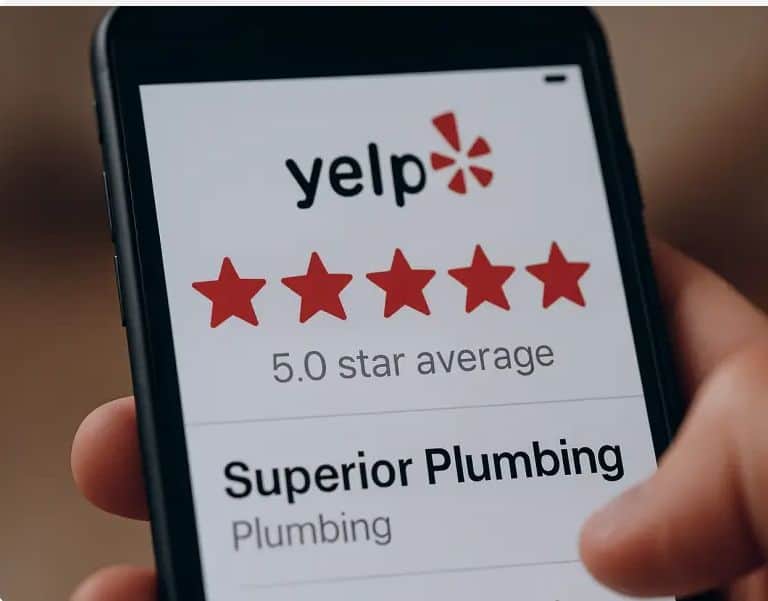
Not all five-star reviews are created equal for emergency marketing purposes. Reviews that contain specific language around speed, after-hours response, and crisis resolution carry significantly more weight with both Google’s algorithm and anxious homeowners scanning for reassurance.
When following up after an emergency job, prompt your customers to mention the specifics of their experience. Reviews containing phrases like “came at 2 AM,” “fixed our burst pipe same night,” or “called at midnight and they answered” directly mirror the search language emergency customers use. According to BrightLocal, 87% of consumers read online reviews for local businesses, and emotional, situation-specific language converts browsers into callers faster than generic praise.
Review Language That Drives Emergency Calls:
“They showed up at 11 PM on a Sunday and had our pipe fixed in under two hours.”
“Called three plumbers at 3 AM — these guys answered immediately and were at my door in 45 minutes.”
“Water was everywhere. They were calm, fast, and professional. Worth every penny.”
How to Add Emergency Services to Your GBP Description
Your GBP description allows 750 characters. Use the first sentence to state emergency availability clearly, then follow with your service area, licensing credentials, and a trust signal like years in business or number of emergency calls handled. Add emergency-specific services — burst pipe repair, sewer backup clearing, water heater replacement — directly to your services list so Google can match your profile to granular emergency searches.
Google Local Service Ads Dominate After-Hours Emergency Search Results
If your Google Business Profile is your foundation, Local Service Ads are your most powerful weapon. LSAs appear above everything else in Google search results — above PPC ads, above the Local Pack, above organic listings. For a homeowner in crisis mode, the first result they see is almost always an LSA.
How the Google Guaranteed Badge Converts Stressed Homeowners Instantly
The Google Guaranteed badge is a green checkmark that appears next to your business name in LSA results. It signals that Google has verified your license, insurance, and background check. For a homeowner who just found water pouring through their ceiling at midnight, that badge does more conversion work than any ad copy ever could. According to Google, LSAs generate significantly higher call-through rates compared to standard paid search ads, and the Google Guaranteed designation is the primary driver of that performance gap.
How to Set Up LSA for Maximum Emergency Visibility
Setting up LSAs correctly from the start determines whether you appear at the top of emergency searches or get buried. Go to Google’s Local Services Ads dashboard and select “Plumber” as your business category. Set your service area to cover every ZIP code you can realistically reach within 60 minutes — emergency customers expect fast arrival, so don’t overextend. Under job types, select every emergency-relevant service: burst pipe repair, drain cleaning, sewer backup, water heater repair, and gas line services if licensed. The more specific your service selection, the more precisely Google matches your ad to high-intent emergency queries.
Budget setting is where most plumbers leave money on the table. Google’s LSA dashboard recommends a weekly budget based on your market size — start at or above that recommendation for emergency services specifically. Set your responsiveness to “within 1 hour” or “ASAP” to signal availability and improve your Ad Rank. Maintain a response rate above 90% by answering every LSA call, even overnight. Google’s algorithm rewards responsiveness with better placement, and a plumber who answers at 3 AM gets pushed higher in results than one who lets calls go to voicemail. Learn more about why your business may be invisible in AI search to ensure your plumbing services are easily discoverable.
How to Increase Ad Spend During High-Demand Weather Events
According to a 2024 study by BrightEdge, emergency plumbing searches spike 609% during January freeze events and 340% during summer storms. These spikes are predictable — and they reward plumbers who are prepared. Monitor weather forecasts for your service area weekly. When temperatures are forecast to drop below freezing for two or more consecutive nights, increase your LSA and PPC budgets by 40-60% at least 24 hours before the event hits. By the time pipes are bursting and homeowners are searching, your increased spend has already locked in top placement while competitors scramble to react.
Your Website Must Work as a 24/7 Emergency Sales Tool
Your website has one job during an emergency: convert a panicked visitor into a phone call within 10 seconds. That means stripping away everything that slows down that conversion — long loading times, buried contact information, generic homepage copy that doesn’t speak directly to someone standing in two inches of water. According to Google, 53% of mobile users abandon a site that takes longer than three seconds to load, and emergency plumbing searches are almost entirely mobile. Your site needs to load fast, communicate availability instantly, and make calling you the path of least resistance.
Every page of your website should function as a standalone emergency landing page. A homeowner searching “burst pipe repair near me” at midnight might land on your homepage, your services page, or a blog post about frozen pipes. Wherever they land, they need to see your phone number, your 24/7 availability, and a clear call to action within the first visible screen — no scrolling required.
Where to Place Your Emergency Phone Number for Maximum Clicks
Your phone number needs to appear in three non-negotiable locations on every page of your website: the top-right corner of the header, a sticky bar that follows the user as they scroll, and a click-to-call button above the fold on mobile. On mobile devices, that number should be a tap-to-call link using the tel: HTML attribute so there’s zero friction between seeing your number and dialing it. Emergency callers do not copy and paste — if they have to work to call you, they’re already looking at the next result.
Use a tracked phone number specific to your website so you can measure exactly how many calls your site generates. Services like CallRail allow you to assign unique numbers to each traffic source — your website, your LSA, your Google Ads — giving you precise data on which channels drive real emergency calls versus which ones just generate clicks.
Why Dedicated Landing Pages for Burst Pipes and Sewer Backups Convert Better
A homeowner searching “burst pipe repair near me at night” is in a completely different mental state than someone browsing for a routine plumber. A generic plumbing services page doesn’t match that urgency. A dedicated landing page built specifically for burst pipe emergencies — with a headline that mirrors the search, immediate availability messaging, and a single call-to-action — converts at dramatically higher rates because it speaks directly to the crisis the visitor is experiencing.
Build individual landing pages for your highest-volume emergency scenarios: burst pipe repair, sewer backup clearing, water heater failure, and frozen pipe thawing. Each page should open with the problem statement, confirm your 24/7 availability in the first sentence, include a click-to-call button before the first paragraph ends, and feature two or three emergency-specific reviews. According to Unbounce, targeted landing pages outperform generic service pages by up to 300% in conversion rate — for emergency plumbing, that gap is likely even wider given the emotional intensity of the search.
From an SEO standpoint, these pages also target long-tail emergency keywords that your homepage can never rank for. “Emergency burst pipe plumber open now,” “sewer backup repair tonight,” and “water heater stopped working emergency” are all high-intent queries with real search volume that a dedicated page can capture where a general homepage cannot. For more insights, consider exploring why authority-based content marketing still works for small businesses.
How Live Chat and AI Chatbots Capture After-Hours Leads
Not every emergency customer wants to call — some prefer to type, especially if they’re in a situation where making noise or being on the phone is difficult. A live chat widget or AI chatbot positioned in the bottom corner of your site captures these visitors before they leave. Tools like Smith.ai offer 24/7 live virtual receptionists trained to handle home service inquiries, qualify the emergency, and either connect the caller to your on-call plumber or schedule an immediate callback. At a minimum, deploy a chatbot that collects name, address, and a description of the emergency — even if no one responds until morning, you’ve captured a lead that would otherwise be lost.
PPC Ads That Target Emergency Plumbing Searches Right Now
Google Local Service Ads dominate the top of the page, but PPC campaigns through Google Ads give you a second layer of visibility that catches searchers who scroll past LSAs or search in ways your LSA doesn’t cover. According to Semrush, emergency-modified plumbing keywords have a 2.8x higher cost-per-click than standard terms but deliver 4.2x higher conversion rates — making the math strongly favorable for plumbers willing to invest in paid search.
The Exact Search Phrases That Signal High-Intent Emergency Customers
Broad keywords like “plumber” attract people at every stage of the buying journey — most of them not ready to spend money today. Emergency PPC campaigns need to target the phrases that signal immediate need and intent to call right now. These are your highest-priority keyword targets:
- “Emergency plumber near me” — 89,000 monthly searches, immediate call intent
- “24 hour plumber [city name]” — high local intent, after-hours specific
- “Plumber open now” — signals the customer has already tried others
- “Burst pipe repair tonight” — extreme urgency, highest ticket value
- “Sewer backup emergency” — health-risk urgency, fast decision
- “Water heater not working emergency” — seasonal spike keyword, high close rate
- “Frozen pipe plumber near me” — weather-triggered, January through March peak
Run these as exact match and phrase match keywords with ad copy that mirrors the urgency of the search. Your headline should confirm availability — “Available Now — 24/7 Emergency Plumber” — and your description should include response time, licensing credentials, and a direct call extension. Ad extensions are critical: use call extensions, location extensions, and sitelinks pointing to your emergency-specific landing pages.
How Call Tracking Tells You Which Ads Drive Real Emergency Calls
Running PPC without call tracking is guesswork. Implement CallRail or a similar platform to assign unique tracking numbers to each ad campaign, ad group, and keyword. This tells you not just which ads generate clicks, but which ones generate calls — and which calls convert into paid jobs. For emergency plumbing specifically, you want to know the exact keywords that trigger calls between 10 PM and 6 AM, because those after-hours keywords deserve the largest share of your budget. Review call recordings weekly to identify objection patterns, response quality issues, and missed call opportunities that are costing you revenue.
Email and SMS Campaigns That Keep Your Brand Top of Mind
Emergency plumbing marketing isn’t only about capturing demand in the moment — it’s also about making sure your name is the one a homeowner already knows when a crisis hits. Email and SMS campaigns to your existing customer base are the most cost-effective way to stay top of mind between jobs, and they generate a consistent stream of both maintenance bookings and emergency referrals from customers who already trust you.
Seasonal Maintenance Reminders That Prevent Emergencies Before They Happen
The best time to market emergency plumbing services is before the emergency happens. Seasonal email campaigns that remind your existing customers to winterize pipes, inspect water heaters, and clear sewer lines before holiday gatherings accomplish two things simultaneously: they generate immediate maintenance revenue and they plant your name firmly in the customer’s mind so that when something does go wrong at 11 PM in January, you’re the only plumber they think to call.
Build four core seasonal campaigns around the highest-risk plumbing periods of the year. Send a pipe winterization reminder in late October before the first freeze. Send a water heater inspection reminder in November before holiday guests arrive and demand spikes. Send a frozen pipe prevention checklist in early January during peak cold events. Send a spring sewer line inspection reminder in March when ground thaw creates root intrusion issues. Each email should include a direct booking link, your emergency number prominently displayed, and a simple one-paragraph explanation of what happens when that specific issue goes unaddressed — because nothing motivates a homeowner faster than a brief, vivid description of the damage they’re risking.
SMS campaigns follow the same seasonal logic but with even higher open rates. According to SimpleTexting, SMS messages carry a 98% open rate compared to roughly 21% for email. A single text message sent the evening before a hard freeze — “Temps dropping below 28° tonight. Protect your pipes or call us 24/7 if something goes wrong: [your number]” — costs almost nothing to send and positions you as a trusted resource the moment that freeze creates a burst pipe down the street.
|
Season |
Campaign Focus |
Send Timing |
Emergency Tie-In |
|---|---|---|---|
|
Late October |
Pipe Winterization Inspection |
2-3 weeks before first freeze forecast |
“We’re available 24/7 if a pipe bursts this winter” |
|
November |
Water Heater Pre-Holiday Check |
2 weeks before Thanksgiving |
“Emergency water heater replacement available same day” |
|
Early January |
Frozen Pipe Prevention Guide |
Night before freeze events |
“Call us immediately if a pipe freezes or bursts” |
|
March |
Spring Sewer Line Inspection |
First week of March |
“Sewer backups spike in spring — we respond within the hour” |
How a One-Click Emergency Call Button in Emails Drives Immediate Action
Every email you send to your customer list — seasonal reminder, maintenance offer, or general newsletter — should include a single high-contrast emergency call button near the top of the email body. Use bold red or orange with white text and copy that reads “Call Our 24/7 Emergency Line Now” linked directly to your tracked phone number using a tel: link. A homeowner who opens your October winterization email on their phone at midnight because their pipes just made a strange sound should be one tap away from reaching you. That single button, consistently placed in every communication, is one of the lowest-cost emergency lead generation tools available to any plumbing business.
The Charlotte Plumbing Company That Tripled Emergency Calls in 90 Days
A mid-sized plumbing contractor in Charlotte, North Carolina was generating roughly 18 emergency calls per month — enough to keep the on-call technician busy but far below the market’s actual demand. After activating Google Local Service Ads with a Google Guaranteed badge, rebuilding their GBP description around 24/7 emergency availability, launching dedicated landing pages for burst pipe repair and sewer backup emergencies, and deploying a CallRail tracking system across all channels, their emergency call volume climbed to 54 calls per month within 90 days. The LSA campaign alone accounted for 61% of new emergency calls. Their average emergency ticket value was $820, meaning the marketing investment generated a measurable and repeatable revenue increase from after-hours services that had previously been treated as an afterthought.
The Fastest Way to Dominate After-Hours Emergency Plumbing in Your Market
You don’t need to do everything at once. Activate Google Local Service Ads first — this single step can generate qualified emergency calls within 48 to 72 hours of approval. While LSA is processing, complete every section of your Google Business Profile with 24/7 hours, emergency service descriptions, and tracked contact information. Build two dedicated emergency landing pages — one for burst pipes, one for sewer backups — and make sure your phone number is a tap-to-call element above the fold on mobile. Add call tracking across every channel so you know exactly where your emergency revenue is coming from. From there, layer in PPC campaigns targeting your highest-value emergency keywords, set up seasonal SMS campaigns to your existing customer base, and increase your ad spend the night before every significant weather event. The plumbers winning the after-hours market aren’t doing anything complicated — they’re just showing up first, signaling trust immediately, and making it effortless to call.
Frequently Asked Questions
After-hours emergency plumber marketing generates some of the most specific and urgent questions in the home services space. Below are the most common ones, answered with the detail that actually helps you make better decisions for your business.
What Is the Best Way to Market 24/7 Emergency Plumbing Services?
The best way to market 24/7 emergency plumbing services is to combine Google Local Service Ads with a fully optimized Google Business Profile that explicitly states after-hours availability. LSAs place your business above all other results — including standard PPC ads and organic listings — and the Google Guaranteed badge provides instant credibility to homeowners in crisis. Support that visibility with dedicated emergency landing pages on your website, a tap-to-call phone number above the fold on every mobile page, and a consistent review generation strategy that surfaces emergency-specific language. This combination covers the moment of search, the moment of evaluation, and the moment of decision — the three points where emergency customers either call you or move on.
How Much Should an Emergency Plumber Spend on Google Ads?
Budget depends heavily on your market size, but a practical starting point for a mid-sized market is $1,500 to $3,000 per month specifically allocated to emergency-modified keywords. According to Semrush, emergency plumbing keywords carry a 2.8x higher cost-per-click than standard terms, which means your dollar goes further when campaigns are tightly targeted to after-hours and emergency phrases rather than broad plumbing searches.
Increase your daily budget by 40 to 60% during predictable high-demand periods — freeze events, holiday weekends, and severe storm forecasts. The conversion rates during these windows are high enough that aggressive spending during peak demand consistently delivers positive return on ad spend. Track every call through a platform like CallRail so you can calculate your exact cost per emergency lead and adjust budget allocation accordingly.
Do Google Local Service Ads Work for After-Hours Plumbing Calls?
Yes — Google Local Service Ads are the single most effective paid channel for capturing after-hours emergency plumbing calls. LSAs appear at the very top of Google search results 24 hours a day, and the Google Guaranteed badge resolves the trust barrier that would otherwise slow a homeowner’s decision at 2 AM. The key to maximizing LSA performance for after-hours calls is maintaining a response rate above 90%, setting your availability to reflect true 24/7 answering, and ensuring your ad is active and budgeted during overnight and weekend hours when emergency searches peak.
How Do I Get More Emergency Plumbing Reviews on Google?
Ask every emergency customer for a review within 24 hours of job completion, while the relief and gratitude of having their problem resolved is still fresh. Send a direct link to your Google review page via SMS — not email, because SMS open rates are nearly five times higher. In your follow-up message, gently prompt them to describe their specific situation: what time they called, how quickly you arrived, and how the problem was resolved. Reviews that contain language like “came at midnight,” “fixed our burst pipe the same night,” or “answered immediately on a Sunday” carry significantly more weight with both Google’s ranking algorithm and future emergency customers scanning for proof that you’re actually available when things go wrong.
What Is the Average Ticket Value for an Emergency Plumbing Call?
The average emergency plumbing ticket value falls between $650 and $950, compared to $450 to $600 for standard scheduled service appointments. According to ServiceTitan, emergency calls carry ticket values 30 to 45% higher than routine jobs, driven by after-hours labor premiums, the urgency of the repair, and the scope of damage that typically accompanies a true plumbing emergency.
Burst pipe repairs and sewer backup emergencies sit at the higher end of that range, particularly when water damage remediation is involved. Water heater replacements during emergency calls frequently exceed $1,200 when parts and after-hours labor are factored in. These numbers make emergency plumbing one of the highest-revenue-per-call service categories in the entire home services industry.
Beyond the immediate ticket, emergency customers have a measurably higher lifetime value. A homeowner who calls you in a crisis and receives fast, professional service becomes a loyal repeat customer who skips the comparison process for every future plumbing need — and refers an average of two to three neighbors within the following year. The marketing investment to capture one emergency call pays dividends well beyond that single job. FunnelTide helps emergency plumbers build the marketing systems that turn after-hours calls into long-term revenue — reach out to see what that looks like for your market.